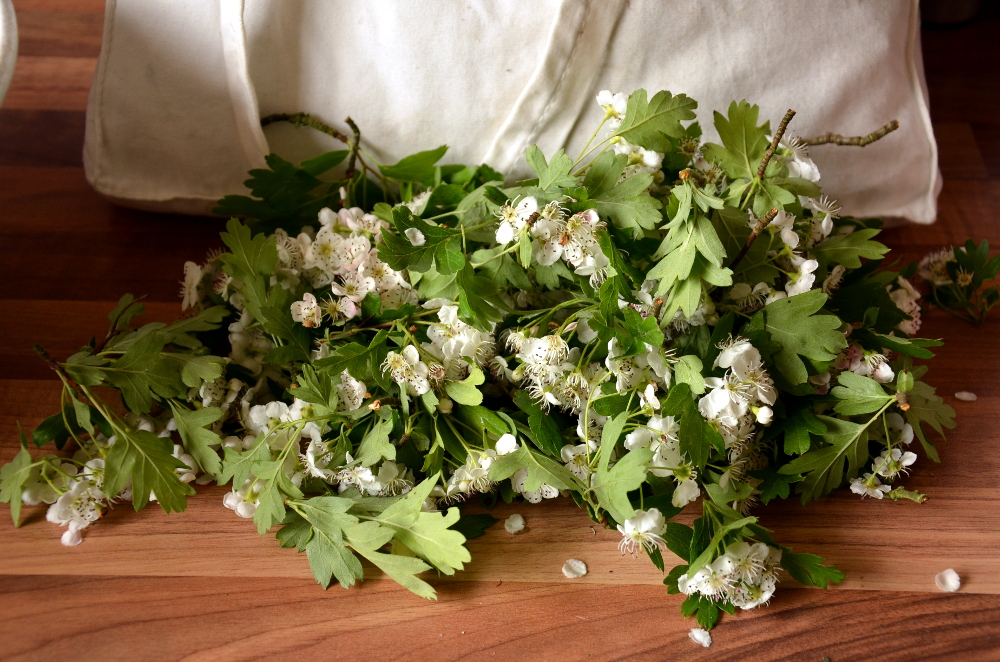
Showing posts with label hawthorn. Show all posts

Friday, 9 October 2015

Hawthorn plant spirit initiation - a transformative process


Last weekend I attended a three day retreat led by with Pam Montgomery, author of 'Plant Spirit Healing, A Guide to Working with Plant Consciousness', to make a deep connection with the plant spirit of Hawthorn, my chosen herbal ally for my first year as a herbwife apprentice.  I saw the retreat advertised the same week I published a post all about Hawthorn, so I really felt a calling to attend.  The retreat was organised by Archetype events who run courses and conferences on plant consciousness, shamanism and related subjects.  Pam and others such as Eliot Cowan, author of 'Plant spirit Medicine', have been inspired by indigenous healing traditions to work with plants on spiritual & energetic levels as well as the physical level of plants as medicinal substances.

In her book Pam writes about her realisation that practising as a herbalist using herbs purely as physical medicine was not addressing the energetic and spiritual blockages & imbalances which underlie the physical manifestation of illness.  She found that working with plants on an energetic and spiritual level can assist with healing in a very profound way and leads to personal transformation to a spirit and heart centred way of being in harmony with our environment.

A method of making a spiritual & energetic connection with plant spirits is to carry out a ceremonial plant diet.  Plant dieting is a traditional process which may involve a range of practices to make a profound relationship with a plant spirit for guidance and healing.  Author Carole Guyett who lives in Ireland has been inspired to carry out sacred plant diets with local native plants as detailed in her book 'Sacred Plant Initiations' which describes how to carry out a ceremonial plant diet and gives examples of plants worked with in this way for each of the 8 seasonal festivals of the wheel of the year.

The retreat involved a ceremonial plant diet of specially prepared Hawthorn elixir whilst fasting or eating only small amounts of foods such as apples, nuts, nut butter & rice cakes for the 2 1/2 day period of the retreat.   Participants were instructed to undertake a gentle liver cleanse for the three days prior to the retreat by taking 1-3 tablespoons of organic cold-pressed virgin olive oil mixed with 1-3 tablespoons of fresh lemon juice followed by half a lemon in hot water an hour before breakfast and to avoid red meat, dairy, refined sugar and excessive amounts of salt, alcohol & coffee.

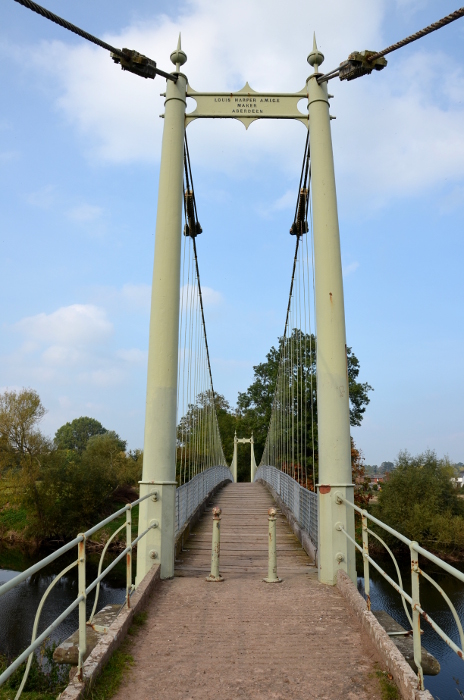
The retreat was held at Poulstone Court a retreat centre set in quiet countryside in Herefordshire close to the River Wye.  During the retreat we spent time in beautiful hedgerow rimmed meadows running along the far bank of the river, reached by a suspension bridge, which was just a few minutes walk from the centre.



The retreat started with gathering as a group for an introduction to the plant dieting process.   The elixir used for a plant diet usually includes every part of the plant, if they can be ingested, in water-based & alcohol-based extracts and flower essences.  Some plants may be used in other ways eg essential oils or infused oils of the plant may be used for anointing the skin and plants used for smudging or smoking could be used in that way.  There is often a support plant for the group and individual process of the plant initiation.  In this case Pam drew a card from the 'Messages from the Plant World', a deck of transformational plant spirit healing cards, for the group as a whole and we each drew a card for an individual support plant for the retreat.

The Hawthorn plant materials used for the plant diet had been gathered in Autumn last year and Spring this year.  The extracts used for the elixir made for the retreat were flower tincture, berry tincture with berries from Wales and from Vermont in the USA where Pam is from, flower essence, infusions of flowers, leaves & berries and distilled flower essence, with the addition of local cider as apples are a support plant for Hawthorn.  The distilled flower essence had been made using an alembic containing flowers and spring water heated over a low heat to create a very concentrated water extract.  The plants were harvested and extracts made with spiritual intent and ceremony.  The elixir contained about 1/3 alcohol and 2/3 water.   There was enough elixir for each participant to have 16 fluid ounces in total, 2 fluid ounces for each of the 8 servings of elixir during the retreat.  

 
The process began with all participants putting an object on the altar laid out in the centre of the space which would be empowered with the energy of Hawthorn for us to put on our altar on return home.  We also wrote our intentions on a piece of paper and put this under the edge of the altar cloth.  We were each smudged in turn with Mugwort, Agrimony & Sagebrush to begin the ceremonial process.  Pam then carried out a ceremonial honouring of the directions of East, South, West, North, Below, Above and Centre.  The Hawthorn extracts and cider were poured into a large pan, with a smaller pan with water-based extracts only for one participant who did not wish to consume alcohol.  The extracts were then ritually stirred by each participant in turn with prayers & good intentions being offered while the whole group drummed and chanted.  The stirring was done in a specific way to create a vortex in one direction then in the other direction, with the spoons being handed on to the next person while the liquid was still in motion.  After the stirring had been completed we had our first drink of the elixir, going up one at a time to receive our helping.

We then were lead on a short walk to the common by the river to each find a Hawthorn to spend time with.  We were invited to use all our senses to get a felt sensation of the vibratory resonance of Hawthorn, to 'put a handle' on this as a way to reconnect with the plant spirit later.  We were also invited to spend time daydreaming with Hawthorn, being aware of everything going on around us and thoughts and images arising in our minds.   I found a place in a ditch with Hawthorns on either side.  I felt a sense of calmness and peace but also a sense of vitality with a fiery quality.  I saw shimmering webs of spider's silk catching the light in the spaces between the trees, bringing a message of Hawthorn's energy of connection.   When walking back through a different corner of the field I found a beautiful Hawthorn covered in clumps of Mistletoe that I returned to several times during the retreat, it felt that this was a really special tree.

Hawthorn & Mistletoe

After spending time with Hawthorn out in nature we returned to the retreat centre for a guided shamanic journey to meet the spirit of Hawthorn on an inner level.  I found myself experiencing Hawthorn through the seasons, from the rising sap and growth of new leaves in the spring, the glorious profusion of flowers in May, the ripening fruit and abundance of Autumn, the wood as fuel for the fire in winter.  I had a experience of the purifying fire energy of Hawthorn and felt a real sense of blessing from this journey.  After the journey we had another drink of the elixir and were asked to notice what is different about the taste & feel of this drink compared to the first drink.  Following this we walked a spiral labyrinth laid out on the lawn with rope and were asked 3 questions at the entrance, the half-way point and centre of the labyrinth, to guide us in our process for the retreat.

After the labyrinth journey we were invited to go out alone to sing & play music to Hawthorn and maybe receive the medicine song of Hawthorn.  I went back to the Hawthorn covered in Mistletoe and spent time drumming & singing there until the sun set behind the hedge-line on the horizon.   That evening we had another drink of the elixir and we were asked to write a love letter or poem to ourselves.  This was a very self-affirming thing to do, I let the words just flow as they came naturally.  We were also invited to ask Hawthorn for a dream when we went to sleep and shared our dreams the next morning when we gathered for our next drink of the elixir.


On the Saturday morning we were guided through the Greenbreath process.  This involved breathing in a particular way accompanied by recorded music and verbal prompts to lead us through stages to break up stuck energy, release trauma and move through obstacles & blocks to the free flow of energy and connection to spirit, helped by the Hawthorn plant spirit.  The breath is a way to access spirit via plants as we take in their energy by breathing in the oxygen they give out and they take in our energy by absorbing the carbon dioxide we breathe out.  This process moved a lot of energy and assisted with releasing emotion, leading to a place of deep stillness and peace.  

On the Saturday afternoon we had another drink of elixir and were then invited to go out to our sit spot to find a twig and make prayers of what we want to invoke and be grateful for in our lives, winding coloured yarn round the twig for each prayer.  The intention of the process was to help us to honour the sacred, to invite spirit into our lives and focus our intention on putting the heart on the throne of our lives.  After this we were lead on another shamanic journey, to experience dismemberment and transformation into a new form, with the help of Hawthorn, followed by another drink of the elixir, absorbing it ever more deeply into our being.

For the Saturday evening fire ceremony we each made a mask for our embodiment of Hawthorn and dressed in ceremonial clothing to honour and feed spirit.  We held a Hawthorn council, each speaking for the spirit of Hawthorn, speaking words from the heart.  On the Sunday morning we had our final drink of the elixir then went as a group to gather round the Hawthorn tree covered in Mistletoe to each speak our thanks to Hawthorn and offer a handmade gift we had been asked to bring as an offering.  We concluded with a talking stick circle to each share our story of how Hawthorn is guiding us in living with heart.  We were given bottles of Hawthorn flower essence to keep taking up until Samhain, the next holy day in the wheel of the year, to help us to keep working with Hawthorn and integrating the Hawthorn energy in our daily lives in the world.

Hawthorn mask

This was a very special weekend which has opened a doorway to working with plants on a deeper level, as healing spirit beings as well as physical medicines.  I hope those reading this may be inspired to explore this way of working with plants in the future.  May this be of benefit to our fellow beings.

References:

'Plant Spirit Healing' Pam Montgomery.
'Plant Spirit Medicine' Eliot Cowan.
'Sacred Plant Initiations' Carole Guyett.


Monday, 8 June 2015

Planting, picking & processing

I am getting into the rhythm of the herbwife role through growing, harvesting and making things from herbs to store and use for common health conditions for myself, family and friends.

A couple of weeks ago I made a trip to the National Herb Centre near Banbury http://www.herbcentre.co.uk/ to buy herb plants to add to the herbs already growing in pots in the patio outside my house and in our allotment.  This is a wonderful specialist garden centre for all kinds of herbs, far more varieties than normal garden centres.  The weekend after they were all planted out in the allotment, I filled up the existing herb bed and started a new herb bed in a previously unused patch of soil as well as putting some of the new plants in odd corners where there was a bit of space.  I look forward to seeing them grow as the year progresses.   The plants that are already there are going strong, many are coming into flower as the spring reaches its peak.  


Allotment table covered in plants to find room for

 New herb bed

 Raspberry plants setting fruit

 Valerian

 Mullein

 Thyme


I picked some Greater Plantain leaves to go with some Ribwort Plantain I had picked previously.  The leaves and flower heads were blended with a hand blender and some vodka to make a tincture, to use for coughs, bronchitis, earache, tinnitus, sinusitis, toothache, irritable bowel & haemorrhoids in doses of half to one teaspoon three times a day.  I used the Plantain double-infused oil made at last month's Springfield Herb Sanctuary workshop to make a salve with beeswax, the oil was measured in millilitres, then the beeswax was weighed out in grams to 1/8 of the amount in millilitres.  The oil & wax was heated in a small pan in a larger pan of gently simmering water then poured into jars and left to set.  The salve can be used for cuts, scrapes, bruises & insect bites. 

Ribwort Plantain & Greater Plantain

Measuring oil & beeswax for making a salve

 Plantain salve

I also made Hawthorn leaf double-infused oil and then made up a salve of Lesser Celandine double-infused oil with a little Hawthorn leaf oil, to use for haemorrhoids.  I used soya wax to make up the salve as I had run out of beeswax, I had to add more soya wax to a total of 1/4 proportion of grams to millilitres of oil as the salve did not set at 1/8 proportion.  Lesser Celandine, also known as Pilewort, is traditionally used for haemorrhoids.  I added some Hawthorn leaf oil for its astringency which should help stop bleeding from haemorrhoids, this is an experimental use based on the properties of the plant, it is not a traditional use. 


 Lesser Celandine oil & salve

I also strained and bottled lots of tinctures & vinegars that had been macerating for a few weeks in a dark cupboard, using a sieve, a jelly bag, a large measuring jug, a funnel and some clean bottles.  I poured the fluid out and squeezed out as much as I could from the left over plant material through the jelly bag.  I picked bottles to decant the strained tinctures & vinegars into depending on the volume produced after straining.   The tinctures & vinegars I decanted were: 

- Immune-boosting vinegar containing chopped fresh Turmeric root, chopped Garlic cloves, chopped root Ginger, chopped Chilli peppers & some Rosehips, 1 teaspoon to be taken in hot water whenever feeling that an infection is starting.

- Dock root tincture for sluggish bowels, constipation, anaemia & poor absorption of nutrients, skin problems, liver congestion & general tiredness to use in doses of half a teaspoon once or twice daily.

- Dandelion root & leaf tincture to be taken as half a teaspoon twice daily for general health maintenance, half to one teaspoon in water three times daily for digestive problems, recuperation from illness, sluggish liver, arthritis, gout, eczema & psoriasis, 10 drops in water frequently for acute skin conditions, 10 drops in water every hour until feeling better from overindulgence in food or drink.

- Ground Ivy tincture 1-15 drops to be taken 1-3 times a day for sore throats, earache, ear congestion, tinnitus, sinusitis, diarrhoea, kidney problems, urinary tract infections & heavy metal poisoning.

- Cleavers tincture for lymph congestion or swelling such as tonsillitis or glandular fever.

- Hawthorn leaf tincture (see last week's post).


Straining & bottling Immune-boosting Vinegar
 Bottled tinctures & vinegars

I also picked some Horsetail tips and have been using these in infusions with hot water with some dried Couch Grass roots for a urine infection, which both these plants are traditionally helpful for.  There are various plants that can be used for these but these were the ones I had on hand fresh or dried.  This is as it would have been for the herbwives of the past who used what they had growing and what they had preserved from the plants in their gardens and foraged from the wild. 
  
References:

'Hedgerow Medicine' Julie Bruton-Seal & Matthew Seal.
'Practical Herbs 2' Henriette Kress.
'Wild Drugs' Zoe Hawes.

Sunday, 31 May 2015

Hawthorn the hedgerow healer

May is the month of Hawthorn blossom so this post is all about Hawthorn which is my herbal ally for the year.  I have put together some photos of Hawthorn trees and collated research I have done into the historical and modern uses of Hawthorn as a medicinal plant and the many herbal preparations that can be made with Hawthorn. It illustrates the great benefits to be had from working with our native plants for healing and wholeness.

The trees in my woods have been a bit late to come into flower this year due to the cool & unsettled conditions since late April.  But they are finally blossoming in their full glory.  Here are some pictures of these beautiful trees and their flowers taken over the last few weeks in the woods .


Hawthorn leaves & buds

 Hawthorn buds close-up

 The first Hawthorn flowers coming out

Hawthorn & bluebells in full bloom

Hawthorn arch over the path

Hawthorn covered in blossom

Hawthorn sprig in flower

Hawthorn flowers close up

Hawthorn blossom & last year's Haws

There are two native species of Hawthorn in Britain, Crataegus monogyna the common Hawthorn and Crataegus laevigata the Midland Hawthorn, which can be used interchangeably for medicinal purposes.  It is the most common species in our hedges and spinneys.  The Anglo-Saxon word for Hawthorn was Haege, our word hedge comes from this.  It has a variety of popular names reflecting the time of year it blooms, the colour of the blossom and its widespread use as a hedging plant.  The popular names include May Tree, Quickthorn & Whitethorn.  There is much folklore associated with Hawthorn.  It was traditionally gathered on Ascension Day and preserved to keep the house from lightning, storms & other calamities.  It was associated with Christ's crown of thorns and reputed to be able to ward off evil due to this.  The famous Glastonbury holy thorn which blooms at Christmas is associated with Joseph of Arimathea, the legend has it that he thrust his staff of Hawthorn wood in the ground at Glastonbury and it took root and sprouted.  The children's rhyme 'Here we go gathering nuts in May' was originally ' Here we go gathering knots of May' from a Germanic word for bud, so this is rhyme is really about gathering blossom not nuts.

In the old herbals cited by the great 17th Century herbalist John Parkinson, as quoted in 'the Herbalist's Bible' by Julie Bruton-Seal & Matthew Seal, Hawthorn was recommended for a variety of conditions.  Drying and powdering the berries and steeping them in wine was cited as an excellent treatment for kidney stones.  It was also recommended for treating water retention due to its astringent and drying qualities.  Distilled wine in which the flowers had been steeped was said to be a sovereign remedy for pleurisy.   Distilled water of the flowers was also recommended for diarrhoea, a tea made from flowers and leaves could be also be used for this purpose.  Hawthorn was also recognised as a drawing agent for splinters and thorns.  Parkinson states cloths steeped in distilled Hawthorn flower water applied to where thorns & splinters have entered the skin will draw them forth.  Using a Hawthorn thorn to lance a boil will help it heal.  Mrs Grieve says a decoction of flowers or berries is useful to cure sore throats due to their astringency.   Penelope Ody states it was also traditionally used for heavy menstrual bleeding.

In modern times Hawthorn has become renowned as a herb for the heart.  This usage was pioneered by a Dr Green in Ireland in the late 19th Century.   He used a tincture of Hawthorn berries for the treatment of heart disease.  He kept this a secret but his daughter revealed this following his death in 1894.  An article by a Dr Jennings was published in the New York Medical Journal in 1896 in which he discussed the action of Hawthorn to regulate cardiac function and the central nervous system see http://www.henriettes-herb.com/eclectic/journals/elth1909/01-crataegus.html  for reference.  It is now well recognised that Hawthorn protects and strengthens the heart muscle and blood supply and the circulatory system generally.  It is useful for preventing heart disease and strokes used as a tonic as well as treating heart & circulatory disorders.  Hawthorn is amphoteric, it will relax or stimulate the heart to normalise its function according to need.  It is helpful for both high and low blood pressure.  It improves metabolic processes in the heart and has anti-inflammatory effects.  It is also helpful for peripheral circulation problems such as Raynaud's and varicose veins.  It is also calming for the nervous system including anxiety, stress, grief and insomnia. 

Matthew Wood, author of the 'Earthwise Herbal' provides a good account of the actions of Hawthorn.  He states that research has found that Hawthorn contains flavonoids, particularly rutin, which is believed to act on the capillaries to reduce wear & tear, removing congestion and increasing blood flow.  It reduces unhealthy cholesterol and increases healthy cholesterols.  It normalises blood pressure and increases blood circulation to the heart.  It is a cardiac tonic which reduces the risk of heart attack and relieves angina symptoms and cardiac arrhythmias.  It has a beneficial effect on the muscles of the heart so is helpful in degenerative conditions.  It also has a tonic effect on blood vessels such as arteries.  It is also helpful in reducing restlessness, irritability, anxiety and attention deficit problems.  He also states that Hawthorn has also recently been recognised as a remedy for autoimmune disease by reducing irritation of the skin, mucous membranes & blood vessels.  It is helpful for respiratory conditions such as allergies, colds, bronchitis, asthma & sinusitis.  It is also helpful for skin irritation, particularly red, dry, irritated skin on the hands & arms.  

Susan Weed states that Hawthorn along with other rose family plants can be used to relieve menopausal symptoms such as headaches, dizziness, menstrual cramps, mood swings & hormonal surges and to nourish the nerves and heart during the change.   Henriette Kress states that Hawthorn, particularly the flowers & leaf accelerate collagen generation which strengthens connective tissue, so it is helpful for rheumatoid arthritis and injuries to tendons & ligaments.  She also states it is helpful for tinnitus, Meniere's disease and other inner ear problems combined with Gingko.

In traditional Chinese medicine Chinese Hawthorn Cratageus pinnatifidia is used for sluggish digestion, particularly of meat.  Hawthorn berries also used to be used in Europe with meat to make it more digestible.  It is thought that this is due to action on the cells of the gut, assisting them to absorb lipids more effectively.  Penelope Ody states in China Hawthorn berries are used as a digestive and circulatory stimulant.  They are mainly taken for symptoms of 'food stagnation' including abdominal bloating, indigestion & flatulence.  They are also used to relieve stagnation of the blood particularly after childbirth and for period pain.  Partially charred berries are used in Chinese medicine for diarrhoea.  It is a Sour food, with yin cooling qualities which causes contraction, to prevent or reverse leakage of fluids & energy and to dry and firm up tissues.  It counteracts the effects of rich, greasy food and helps break down fats & protein.

Wood states the berries are the part that was used traditionally, particularly tinctured in brandy.  The recommended dose is 20 drops of tincture first thing in the morning and before bed, taken long term.   Penelope Ody states that the flowers have also been found to be effective as a heart tonic and research has found that the flowers actually have more constituents which affect cardiac function than the berries.  The flowers can be taken as an infusion for poor circulation and as a tonic for heart problems, they can be combined with Yarrow for hypertension.  They can be used as a tincture for heart & circulatory disorders.  The berries can be used in a decoction, 30g of berries to 500ml water boiled for 15 minutes, for diarrhoea.  The juice from the fresh berries can be used as a cardiac tonic and for diarrhoea & as a digestive tonic.  The berries can be used to make a tonic wine.  Kress states that the flowers and leaves act more quickly than the berries, but the effects of the berries last longer.

Bartram states tea should be prepared with 1-2 teaspoons dried leaves & flowers for each cup of boiling water, infused for 5-10 minutes, taken 3 times a day for insomnia or for the heart under stress.  He states the berries can be decocted with 1-2 heaped tablespoons to each cup of water, simmered gently for 2 minutes.  He states the dose of tincture is 15-30 drops.  Susan Weed puts fresh leaves or flower buds or fresh or dried haws in alcohol, glycerine or vinegar for 6 weeks, then uses 30 drops of tincture, 2 teaspoon of glycerite or one or more tablespoons of vinegar daily, or tea made from dried infused leaves.  Hoffman states that Hawthorn berries can be used externally in lotions, compresses or poultices for inflammation and pain in local blood vessels such as phlebitis & varicose veins. 

Hawthorn is generally regarded as non-toxic.  It is regarded as a tonic herb which is safe to use on a long-term basis.  It takes time to work as its effects are gradual by toning tissue and regulating function.  It may increase the action of some heart medications and decrease their side-effects so anyone taking medication for heart or circulatory conditions should check with their doctor before taking Hawthorn.  It can cause palpitations and low pulse rate & blood pressure, use should be stopped if problems such as palpitations or feeling faint, dizzy or weak occur. There is a good discussion of using Hawthorn for heart disease and things to consider if on medication in 'Practical Herbs 2' by Henriette Kress.  In Chinese medicine sour foods such as Hawthorn should be used sparingly by those who are prone to dampness, heaviness of mind or body, constipation and diseases of tendons & ligaments.

I have been making various Hawthorn preparations with the leaves & flowers I have gathered this month with recipe ideas from 'Practical Herbs 2' by Henriette Kress, 'Letting in the Wild Edges' by Glennie Kindred and 'The Domestic Alchemist' by Pip Waller.

I made Hawthorn flower essence in the woods on a sunny day when the flowers were first coming out.  I placed a bowl of spring water in the limbs of a Hawthorn tree and put a few of the flowers in the water.  I asked the tree to infuse the water with her essence and sat beneath the tree to meditate for a while.  I left it to infuse overnight then returned to the tree the following morning and removed the flowers with a sprig of Hawthorn, strained the liquid through a piece of clean muslin and a funnel into a jug.  The liquid was poured into bottles to half fill them, then topped up with brandy to make the mother essence.  Some of this was offered back to the tree in thanks.  7 drops of the mother essence can be diluted in a 30ml dark dropper bottle half filled with spring water & half with brandy, to use 4 drops at a time to work with the energy of the plant at a subtle level.  Hawthorn has the ability to release blocked energy and open the heart to giving and receiving.  It releases stress and helps to let go and trust.


Making Hawthorn flower essence

Later in the month I harvested a bag of leaves & flowers trees in my woods.  I picked clusters of leaves and flowers together from the tips of branches I could reach easily .  I asked the trees if I could pick leaves & flowers for my remedies and tested it was ok to pick them by tugging gently, some came away very easily, those that did not I left.  I thanked the trees and sang to them as I was picking.  I offered some of the flower essence I made earlier in the month in return.  I took the bag home and separated the leaves and flowers into two bowls to make up separate remedies.


Harvested Hawthorn leaves & flowers

 Hawthorn leaves & flowers after being separated


The young leaves are edible and are traditionally known as 'bread & cheese' for eating raw in salads or sandwiches.  I used the fresh leaves and flowers to make up a variety of herbal preparations as detailed below.  I also dried some of the leaves & flowers on the lowest setting in my dehydrator, to keep as dried herbs for teas or herbal baths.  

Hawthorn Flower Syrup

325ml water
600g white sugar
7 tablespoons rosewater
50ml lemon juice
2 good handfuls of freshly picked Hawthorn flowers

Boil the water & sugar briskly for 3 minutes.  Mix the rosewater & lemon juice with the syrup.  Pour the syrup over the flowers in a bowl and leave to stand for 1-2 hours, until cool.  Strain through clean muslin or a jelly bag and bottle in sterilised bottles.  This makes about 900ml of syrup.  It should keep for about a year until opened, then up to a month in the fridge once opened.  The syrup preserves the heart-strengthening & uplifting qualities of Hawthorn flowers.  It can be taken neat or diluted with water.  Recipe from 'The Domestic Alchemist' by Pip Waller.


 Making Hawthorn flower syrup

Hawthorn flower syrup

Hawthorn tincture

A classic use for Hawthorn is to make separate tinctures of leaves, flowers and berries and combine them.  To make tinctures of the leaves & flowers fill a clean jar with leaves &/or flowers and fill with vodka.  Poke the contents with a chopstick to release any air bubbles.  Leave for 2-4 weeks, strain and bottle.  Dosage 15-30 drops 3 times a day.


Hawthorn leaf & flower tinctures

Hawthorn Elixir

I made Hawthorn leaf & flower Elixir by filling clean jars with leaves & flowers, filling 2/3 full with brandy, then fill the remaining 1/3 jar with runny organic honey, then giving the mix a good 'podge' with a chopstick.  This will be left to steep for 2-4 weeks in a dark cupboard, then strained.  1-2 teaspoons to be taken as needed.


Hawthorn flower & leaf Elixir

Hawthorn honey

I also made herbal Hawthorn leaf and flower honeys by filling empty honey jars with the leaves and flowers respectively then filling with runny honey and poking with a chopstick to release air bubbles.  Honey draws out the goodness from plants and combines them with the benefits of honey.  Herbal honeys should be left to infuse for 4-6 weeks.  They can be taken by the spoonful, added to hot drinks or taken with food such as yoghurt or fruit.


 Hawthorn herbal honeys
 
Hawthorn vinegar

I also made Hawthorn leaf and flower vinegar.  Making herbal vinegars is another way of extracting and preserving the goodness of plants and combining them with the many benefits of cider vinegar.  I filled jars with Hawthorn leaves and flowers respectively then poured in apple cider vinegar to fill the jars, then 'podged' the contents with a chopstick to release air bubbles.  The vinegar will be left to steep for about a month then strained and rebottled.  Herbal vinegar can be used in salad dressings or drunk in hot water with honey.


 Hawthorn herbal vinegars


Hawthorn oil & salve

I used some of dried Hawthorn leaves to make a double-infused oil.  I put 4 handfuls of dried leaves in a small saucepan then covered them with olive oil.  This pan was placed inside a slightly larger pan with about an inch of water in the bottom and simmered on a low heat for 2 hours.  The first lot of leaves was removed and another 4 handfuls of leaves was added to the oil which was heated in the water bath for another 2 hours.  The oil was then strained through muslin and poured into a clean jar.  

Some of the oil was then used to make a salve by adding soya wax.  I used 15g of soya wax to 60ml of oil.  This was heated in the same way as the oil, until the wax melted then poured immediately into jars and left to cool and set.  There are no documented uses of Hawthorn Leaf oil or salve I have been able to find but based on the properties of Hawthorn discussed in the literature the oil should be useful for splinters & boils and the salve should be helpful for problems with peripheral circulation such as phlebitis, varicose veins.  


Making Hawthorn leaf double-infused oil

 Making Hawthorn salve

 Hawthorn leaf infused oil and salve

I hope this will inspire you to try your hand at making and using Hawthorn in home-made herbal remedies and to experience its healing blessings for yourself.

References

'A Modern Herbal' Maud Grieve.
'Bartram's Encyclopedia of Herbal Medicine' Thomas Bartram.
'Healing with Whole Foods, Asian Traditions and Modern Nutrition' Paul Pitchford.
'Hedgerow Medicine' Julie Bruton-Seal & Matthew Seal.
'Letting in the Wild Edges' Glennie Kindred.
'New Menopausal Years The Wise Woman Way' Susan S Weed. 
'Practical Herbs 2' Henriette Kress.
'The Concise Herbal Encyclopedia' Donald Law. 
'The Domestic Alchemist' Pip Waller.
'The Earthwise Herbal' Matthew Wood.
'The Herbal Drugstore' Linda B White & Steven Foster.
'The Herbalist's Bible' Julie Bruton-Seal & Matthew Seal.
'The Herb Society's Complete Medicinal Herbal' Penelope Ody.
'The New Holistic Herbal' David Hoffmann. 
'Wild Drugs' Zoe Hawes.

Thursday, 23 April 2015

The gifts of Spring - beauty, food & medicine

I spent Saturday 11th April at Springfield Herb Sanctuary on a work day.  I helped dig over a bed which will be used for planting herb plants.  I kept the Dandelions and Docks I dug up to take home to turn into Dandelion tincture and Dock tincture.  I also had a walk round with Sarah, my herbwife mentor, seeing all the herbs that are coming up in her herb beds at the sanctuary.  This is really helpful for learning to identify plants at different stages of growth, which is one of the things I am learning as an apprentice herbwife.  Sarah very kindly let me dig up a young Tansy plant to take home to plant in my own herb bed for future use. For future events at the Sanctuary see http://kitchenherbwife.blogspot.co.uk/p/springfield-sanctuary-workshop-dates.html

At Springfield Herb Sanctuary

 View from the Sanctuary over the Cotswolds

The herb beds I helped to dig


 Elecampane coming up


 Lady's Mantle 


Solomon's Seal

For more photos see https://www.facebook.com/media/set/?set=a.10153255717357938.1073741890.657002937&type=1&l=6c20633d26


Back home in the kitchen I put Dandelion roots & leaves into a jar and filled the jar with vodka to make a another batch of tincture.  I have been taking 2 half teaspoons a day since decanting the first batch, it definitely seems to be helping with my digestion.  I washed and chopped up the Dock roots into a separate jar to make tincture, which should be helpful for poor absorption, anaemia, skin problems, sluggish bowels, constipation & liver congestion.  Any dock with yellow roots can be used as this indicates the presence of the medicinal compounds.

Last weekend I harvested a big bag of Nettles and a bag full of Cleavers at the allotment, plus a few Wild Garlic leaves.  Some of the Nettles were used for Nettle Aloo (see recipe on previous post) as part of a dinner for friends, accompanied by raita made with natural yoghurt and finely chopped Wild Garlic leaves.  I also made Nettle Pasties (see recipe below) to take to the woods for a New Moon picnic.  My husband got in the act and made Nettle Soup with onion, potato, celery and nettles, with some Miso added at the end to make a nice rich dark nourishing broth.  The Cleavers were roughly chopped and put in a jar with vodka to make Cleavers tincture, which should be useful for lymph congestion or swollen glands such as Tonsilitis.

I also paid a visit to the woods and picked Hawthorn leaves to make a tincture with brandy, which can be combined with tinctures of the flowers and berries as they appear, to get the maximum benefit.  Hawthorn is renowned as a tonic for the heart and circulatory system.  My husband dug up a patch of Lesser Celandine, also known as Pilewort, after the nodules on the roots which look like haemorrhoids.  This is an example of a traditional plant signature in which physical features of plants were thought to indicate what sort of conditions the plant would be beneficial for.  And indeed Pilewort is a remedy for piles, both as dried herb used to make an infusion for internal use and to make an ointment from fresh herb by making a double-infused oil and adding beeswax, to use externally.

Recipe for Nettle Pasties - makes 2 large pasties or 4 small pasties

Pastry:
8oz plain flour
Pinch of salt
4oz butter
3-4 tablespoons of cold water
- Sift the flour & salt into a bowl, add the butter chopped into lumps and stir to coat the butter in flour.
- Rub the butter into the flour using your fingertips until the mixture resembles fine breadcrumbs.
- Sprinkle the water over the mix and stir with a round-bladed knife till the mixture sticks together in large lumps, if it is a bit dry add a bit more water.
- Collect the dough together into a ball.
- Knead it lightly on a lightly floured surface to make a smooth dough.
- Wrap the dough in cling-film and leave in the fridge to rest for 30 minutes.

Filling:
Large colander of washed nettle tops with stalks removed
Medium onion finely chopped
2 large garlic cloves very finely chopped
1 medium mushroom finely chopped
Wedge of blue cheese crumbled
2 beaten eggs
Salt & pepper to taste
- Saute the onion to soften it, add the garlic & mushroom.
- Steam the nettle tops in a little water for a few minutes till well wilted.
- Squeeze out the liquid with a wooden spoon, drain the liquid into a jug to use in stock for soup.
- Mix the vegetables with the cheese & eggs, add seasoning.
- Roll out & cut the pastry to make rounds.
- Put filling in the middle of pastry rounds and top with another round, press the edges together all the way round to seal.
- Use any left over pastry to make pastry decorations, stick on with a little water.
- Bake in a medium oven for about 25 minutes.
- Eat hot or cold, they are perfect for taking out for a picnic.

Nettle Pastie

Dock roots being prepared for tincture

Dock Root Tincture

 Cleavers Tincture

Hawthorn Leaf Tincture

Lesser Celandine/Pilewort

Making Pilewort Double-infused Oil

References

'Hedgerow Medicine' Julie Bruton-Seal & Matthew Seal
'Letting in the Wild Edges' Glennie Kindred
'Wild Drugs' Zoe Hawes